Exploring the Role of a Metal Foundry in Modern Manufacturing Processes
Metal foundries are crucial in the landscape of modern manufacturing. They offer important components throughout different fields, adapting to the demands of sectors such as auto and aerospace. Advanced strategies such as 3D printing and automated casting have actually changed their procedures. Furthermore, sustainability has actually ended up being a concern, affecting their methods. As these foundries progress, the ramifications for producing efficiency and development are significant, elevating questions concerning their future trajectory in an ever-changing economic situation.
The Advancement of Metal Casting Techniques

With the increase of mass manufacturing, foundries adopted approaches like die casting and lost foam casting, simplifying the production procedure and decreasing waste. Each advancement in metal casting methods has actually accommodated the needs of different industries, from automotive to aerospace. As metal casting proceeds to advancement, the interaction between strategy and modern technology remains essential in meeting contemporary manufacturing challenges, making sure that foundries adapt and grow in an ever-changing landscape.
Combination of Advanced Technologies in Foundries
Conventional metal casting methods have served the market well for centuries, the combination of sophisticated modern technologies in foundries is reinventing the manufacturing landscape. Automation and robotics streamline production procedures, enhancing effectiveness and reducing the danger of human error. When impossible with conventional methods, technologies such as 3D printing enable for rapid prototyping and the creation of intricate geometries that were. Additionally, information analytics and the Internet of Points (IoT) allow real-time monitoring and predictive upkeep, ultimately leading to decreased downtime and increased productivity. These advancements also help with modification, allowing makers to react promptly to market demands. As sustainability ends up being a top priority, the adoption of eco pleasant technologies, such as electric melting heaters and advanced sand reclamation systems, even more shows the sector's commitment to technology. Collectively, these modern technologies not just improve functional effectiveness but likewise setting foundries at the leading edge of modern production techniques.
The Effect of Material Scientific Research on Foundry Operations
Material science plays a crucial duty in boosting shop operations, affecting both the choice of materials and the overall casting procedure. Breakthroughs in material scientific research give a much deeper understanding of the residential or commercial properties of steels and alloys, allowing foundries to pick the most appropriate materials for specific applications. This knowledge enhances the efficiency and sturdiness of cast products, which is crucial for meeting sector standards.
Technologies in product formulas and additives contribute to improved casting techniques, decreasing issues and optimizing production efficiency. The development of innovative metal compounds and wise products permits foundries to create lighter, stronger parts, which are progressively demanded in numerous markets such as vehicle and aerospace.
Furthermore, material science help in the recycling of metals, making procedures more economical and reliable. By leveraging the most recent searchings for in product scientific research, foundries can adjust to advancing market needs, ensuring their competition in a quickly altering production landscape.
Sustainability Practices in Modern Metal Foundries
With the expanding emphasis on environmental duty, modern-day metal foundries are significantly applying sustainability methods to minimize their environmental impact (Aluminum Casting). One vital method includes the recycling of scrap metal, which not only lowers waste however also saves power official site and resources. Foundries are adopting advanced melting innovations that improve power performance, consequently decreasing greenhouse gas exhausts. In addition, making use of eco-friendly finishings and products has actually acquired traction, more decreasing unsafe emissions throughout manufacturing
Water preservation methods, such as closed-loop cooling systems, are being carried out to reduce freshwater use. Several foundries are likewise buying renewable resource sources, like solar and wind, to power their procedures, therefore lowering dependence on nonrenewable fuel sources. Staff training programs focused on sustainability methods advertise a society of ecological recognition within the labor force. These efforts collectively contribute to a more sustainable future for metal foundries while satisfying the needs of eco-conscious customers.
The Future of Foundries in a Changing Financial Landscape
As the global economic situation evolves, foundries deal with a myriad of challenges and chances that will certainly form their future (Metal Casting). The boosting demand for lightweight materials and advanced alloys requires technology in production techniques and technological combination. Automation and smart production methods are ending up being necessary for boosting effectiveness and decreasing operational costs. In enhancement, the rise of sustainability issues compels foundries to take on greener procedures and reusing campaigns, straightening with international environmental goals
The economic landscape is also changing, with supply chain disruptions and fluctuating raw product costs offering substantial hurdles. Foundries have to adapt by expanding their supply sources and buying materials scientific research. Additionally, partnership with sectors such as renewable resource and electric vehicles can promote development. Ultimately, the future of foundries will certainly rely on their capacity to utilize technological improvements while remaining responsive to market dynamics and environmental imperatives, guaranteeing their relevance in contemporary production.
Frequently Asked Concerns
What Sorts of Metals Are Commonly Utilized in Foundries Today?
Generally made use of metals in foundries today include aluminum, iron, steel, copper, and zinc. These materials are preferred for their varied properties, enabling a large range of applications in industries such as vehicle, aerospace, and building and construction.
How Does a Foundry Guarantee High Quality Control in Its Products?
What Precaution Are Carried Out in a Metal Foundry?
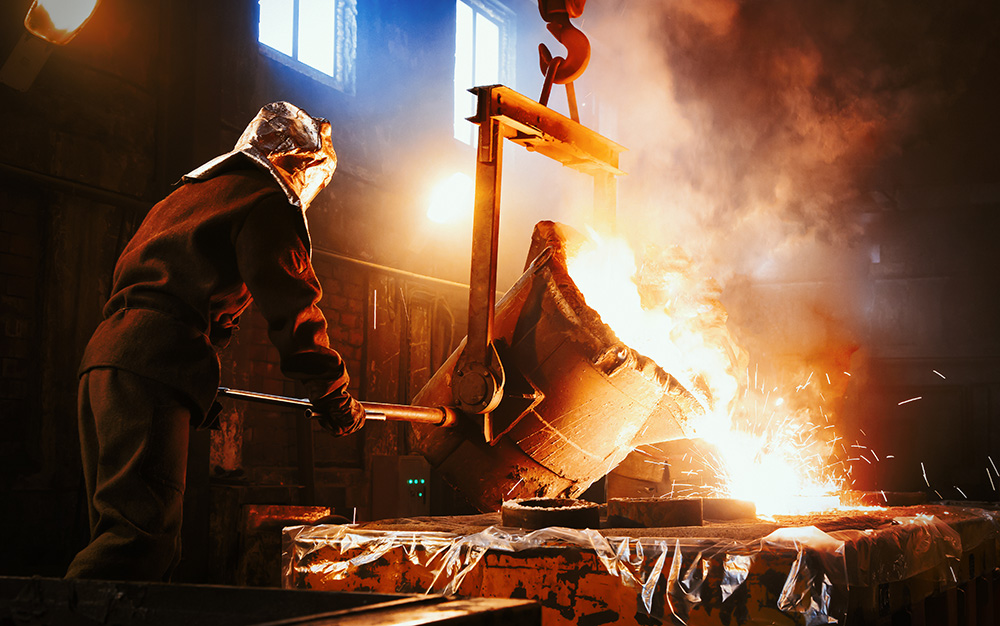
Metal foundries apply precaution including personal protective equipment, air flow systems to minimize inhalation of fumes, this website normal security training for workers, emergency action procedures, and rigorous tools maintenance to reduce threats and guarantee a secure functioning setting.
For how long Does the Metal Casting Process Normally Take?
The metal casting procedure generally takes numerous hours to days, depending upon elements such as the intricacy of the mold and mildew, the sort of metal made use of, and cooling down times. Each project's needs greatly influence the period.
What Industries Largely Rely Upon Metal Foundries for Production?
Automotive, building, aerospace, and equipment industries primarily count on metal foundries for production. These markets utilize cast metals for elements, ensuring durability and efficiency crucial for their corresponding applications in production and setting up procedures.
Metal foundries are essential in the landscape of modern manufacturing. Metal Foundry. Traditional metal casting techniques have served the industry well for centuries, the integration of sophisticated modern technologies in foundries is changing the production landscape. Advancements in material science provide a much deeper understanding of the homes of metals and alloys, enabling foundries to choose the most suitable materials for particular applications. With the expanding focus on environmental responsibility, contemporary metal foundries are significantly implementing sustainability techniques to minimize their ecological impact. Automotive, equipment, building, and aerospace markets mostly depend on metal foundries for production
Comments on “How automation and AI are redefining the Aluminum Foundry process”